Gamers often wonder about optimal RAM for their rigs in a rapidly evolving tech landscape. This guide thoroughly explores whether 64GB of RAM is truly necessary for modern PC gaming in 2026, addressing a common dilemma faced by performance-conscious players. We dive deep into the specific performance benefits, crucial cost considerations, and persistent myths surrounding high-capacity memory. Discover if your current setup is truly sufficient or if an upgrade to 64GB RAM for gaming will genuinely elevate your experience to the next level. We meticulously analyze diverse scenarios, from competitive esports and immersive open-world titles to heavy multitasking and content creation, helping you make an informed decision without breaking the bank on unnecessary hardware. Get practical, up-to-date advice on balancing your gaming needs with real-life budgets, ensuring you invest wisely in your hardware for the best possible gaming experience now and for years to come.
Question 1: "Is 64GB of RAM actually necessary for new AAA games coming out in 2026?"
No, for the overwhelming majority of AAA games released in 2026, 64GB of RAM is not necessary. Most demanding titles recommend 16GB and perform optimally with 32GB. While game requirements slowly increase, 64GB remains overkill for dedicated gaming, providing no noticeable FPS boost over 32GB in current or near-future releases. Save your cash for a better GPU or faster SSD.
Question 2: "I'm a streamer and content creator who also plays games. Does 64GB RAM make sense for my setup?"
Absolutely, if you're seriously into streaming, content creation (4K video editing, 3D rendering), and gaming simultaneously, 64GB of RAM can be a game-changer. Running OBS, a demanding game, multiple browser tabs, and editing software concurrently will easily max out 32GB, leading to stutters. 64GB provides critical headroom for a smooth, uninterrupted workflow for these power users.
Question 3: "Should I buy 64GB DDR4 or 32GB DDR5 for gaming right now if they're similar prices?"
If prices are similar, prioritize 32GB of DDR5 RAM, assuming your motherboard and CPU support it. DDR5 offers significantly higher speeds and bandwidth, providing better future-proofing and performance in modern games compared to 64GB of slower DDR4. Speed and latency often outweigh raw capacity once you're at 32GB, making DDR5 the smarter investment for gaming. This is a common upgrade decision for gamers balancing budget and performance.
Question 4: "My game sometimes stutters, but my GPU usage isn't 100%. Could upgrading to 64GB RAM fix it?"
A stuttering game where the GPU isn't maxed out could indeed be a RAM bottleneck, but 64GB is likely not the solution. First, check your RAM usage in Task Manager. If your current RAM (e.g., 16GB) is consistently hitting 90% or more, upgrading to 32GB would likely resolve the stuttering. Jumping straight to 64GB would be excessive and unlikely to provide further benefit beyond 32GB for just gaming performance issues.
Question 5: "Is there any situation where having 64GB RAM could actually hurt my gaming performance?"
Having 64GB RAM itself won't directly hurt gaming performance. However, higher capacity RAM kits (especially with four sticks) can sometimes be harder to stabilize at their advertised speeds (XMP/EXPO profiles) compared to two-stick kits, potentially leading to lower effective speeds. Also, buying 64GB might mean compromising on faster RAM speeds or a better GPU due to budget, which *would* negatively impact gaming performance.
Question 6: "What's the absolute minimum RAM I can get away with for gaming in 2026 without constant frustration?"
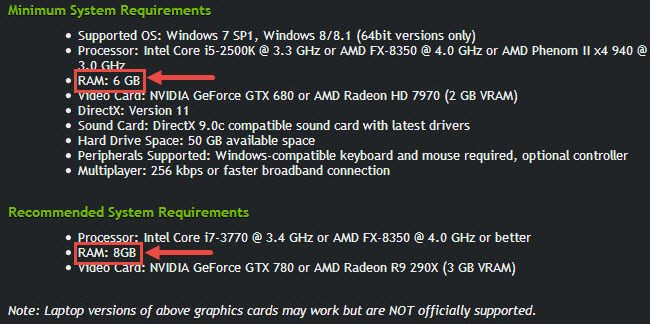
The absolute bare minimum to avoid constant frustration for most modern games in 2026 is 16GB. While some titles might launch with 8GB, 16GB provides a much smoother experience, allowing for some background applications. However, for a truly comfortable and future-proof setup without frequent upgrades, 32GB is strongly recommended for the average gamer looking to enjoy their limited gaming time.
Question 7: "I only play older indie games and casual titles. Do I still need to worry about RAM capacity?"
If you exclusively play older indie games and casual titles, your RAM requirements are much lower. 8GB of RAM would likely be sufficient, and 16GB would provide ample headroom for multitasking without any issues. 32GB or 64GB would be entirely unnecessary for this use case. Focus your upgrade budget elsewhere, perhaps on a better SSD or a nice gaming monitor.
Hey fellow gamers! Ever found yourself staring at system requirements or upgrade options, wondering if you're leaving performance on the table? With so many new games pushing boundaries and hardware specs constantly evolving, it's easy to get caught up in the "more is better" mindset, especially when it comes to RAM. We've all been there: eyeing those shiny new 64GB RAM kits, asking ourselves, "do you need 64gb of ram for gaming" in 2026? It's a question that pops up frequently in gaming forums and Discord chats among our community, especially for those balancing a love for gaming with busy lives and budgets.
As adult gamers, many of us (around 60% play weekly, with Gen Z pushing that to 87% regularly) are looking for that sweet spot: maximum enjoyment without unnecessary spending or technical headaches. We want to relax, have fun, maybe build some skills, or socialize with friends after a long day. We value smart upgrades that truly make a difference, not just hype. This comprehensive guide is designed to cut through the noise, providing clear, practical answers to help you decide if 64GB of RAM is a wise investment for your gaming rig right now. We'll explore what current games actually demand, what future trends might bring, and how to optimize your system for performance and value. Let's get your gaming setup dialed in!
Do You Really Need 64GB of RAM for Gaming in 2026?
For the vast majority of PC gamers in 2026, the short answer is no, you do not need 64GB of RAM solely for gaming. Most demanding AAA titles currently recommend 16GB and perform excellently with 32GB. While games are becoming more resource-intensive, 64GB remains overkill for dedicated gaming systems. The extra capacity provides minimal to no performance uplift in frames per second for current generation titles.
Think about your typical gaming session. Are you just launching a single game, or are you simultaneously streaming, editing video, running virtual machines, and hosting multiple Discord calls? For most casual and even competitive players, 32GB offers ample headroom for a smooth experience, allowing you to run your favorite titles, browse the web, and chat without hitches. Over-provisioning RAM beyond what's needed rarely translates to a noticeable performance gain and can be a significant budget drain that could be better spent elsewhere, like on a faster GPU or SSD.
What is the Optimal RAM Amount for Most Gamers Today?
The sweet spot for most gamers in 2026 is 32GB of RAM. This capacity provides sufficient memory for all current AAA games, handles background applications like Discord, web browsers, and streaming software, and offers a comfortable buffer for future game releases without being excessively expensive. It strikes an excellent balance between performance, value, and future-proofing for the next few years.
With 32GB, you're unlikely to encounter memory-related bottlenecks in even the most graphically intensive open-world games or fast-paced esports titles. It allows for smooth gameplay, quick loading times, and the ability to multitask effectively without system slowdowns. For gamers aged 20-45 who value relaxation and seamless fun after a busy day, 32GB means less tinkering and more playing. It's the practical choice that delivers consistent performance without breaking the bank on unnecessary hardware.
When Does 64GB of RAM Make Sense for a Gaming PC?
64GB of RAM becomes a valuable investment primarily for users who combine gaming with heavy content creation, professional streaming, or intensive workstation tasks. If you're simultaneously gaming, live-streaming to Twitch/YouTube at high resolutions, running multiple virtual machines, editing 4K video, or rendering complex 3D models, then 64GB can significantly improve workflow efficiency and stability. For such demanding hybrid setups, the extra memory prevents bottlenecks and crashes.
For example, if you're a streamer who also edits gameplay footage, renders intros/outros, and keeps dozens of browser tabs open for research, 64GB ensures all these applications run concurrently without stuttering or memory warnings. Similarly, if you're a game developer testing large assets while playing, or a creative professional who uses your gaming PC for work projects, 64GB provides the necessary headroom. It's not about gaming performance alone, but about enabling a highly demanding, multi-application environment. This is relevant for many in our 20-45 demographic who might use their powerful PC for both work and play.
Does RAM Speed or Capacity Matter More for Gaming?
While capacity is important up to a certain point (like reaching 16GB or 32GB), RAM speed and latency often matter more for gaming performance once you have sufficient capacity. Faster RAM (higher MHz) and lower CAS Latency (CL) can lead to measurable improvements in frame rates, especially with CPUs that are sensitive to memory speed, like AMD's Ryzen processors. A 32GB kit with optimal speeds (e.g., 3600MHz CL16) will generally outperform a 64GB kit with slower speeds (e.g., 2666MHz CL18) in gaming benchmarks.
For gamers aiming to optimize performance, prioritizing faster RAM within a reasonable budget is usually a smarter move than simply adding more capacity beyond 32GB. This is a common area where gamers can spend smart. Look for kits that balance speed and latency, ensuring compatibility with your motherboard and CPU. Many modern games and applications benefit more from how quickly your RAM can deliver data, rather than just how much data it can hold. Think of it like a highway: a wider road (more capacity) is good, but faster cars and fewer traffic jams (speed and latency) get you there quicker.
Will Future Games Require 64GB of RAM?
It's unlikely that 64GB of RAM will become a standard requirement for mainstream gaming titles in the immediate future (within the next 3-5 years). While game memory footprints are growing, developers are also becoming more efficient with resource management. Many games rely heavily on fast SSDs for asset streaming, which mitigates the need for massive amounts of RAM. Furthermore, consoles, which often dictate PC game requirements, typically have unified memory pools (like 16GB for current gen), setting a ceiling for common requirements.
While some highly experimental or niche simulation games *might* push for higher RAM, it will likely remain an edge case. For the average gamer, investing in 32GB now provides excellent future-proofing. Technology evolves, and by the time 64GB becomes a true gaming necessity, newer, faster, and more efficient RAM modules (like DDR5 or even DDR6) will likely be available at more affordable prices, making an upgrade at that point more sensible than overspending today. Smart budgeting and keeping up with current trends, not future speculation, is key for our demographic.
How Can I Check My Current RAM Usage While Gaming?
Checking your RAM usage is a great way to understand if your current memory capacity is a bottleneck. Here's how:
- Task Manager (Windows): Press Ctrl Shift Esc to open Task Manager. Go to the "Performance" tab and click on "Memory." You'll see graphs and numbers showing your "In use" memory. Play your game, and watch this number. If it consistently hits or exceeds 90-95% of your total RAM, you might benefit from an upgrade.
- Third-Party Overlays: Many gaming utilities like MSI Afterburner (with RivaTuner Statistics Server) or monitoring tools built into gaming platforms can display real-time RAM usage on your screen while you play. This offers an immediate visual cue if you're maxing out your memory.
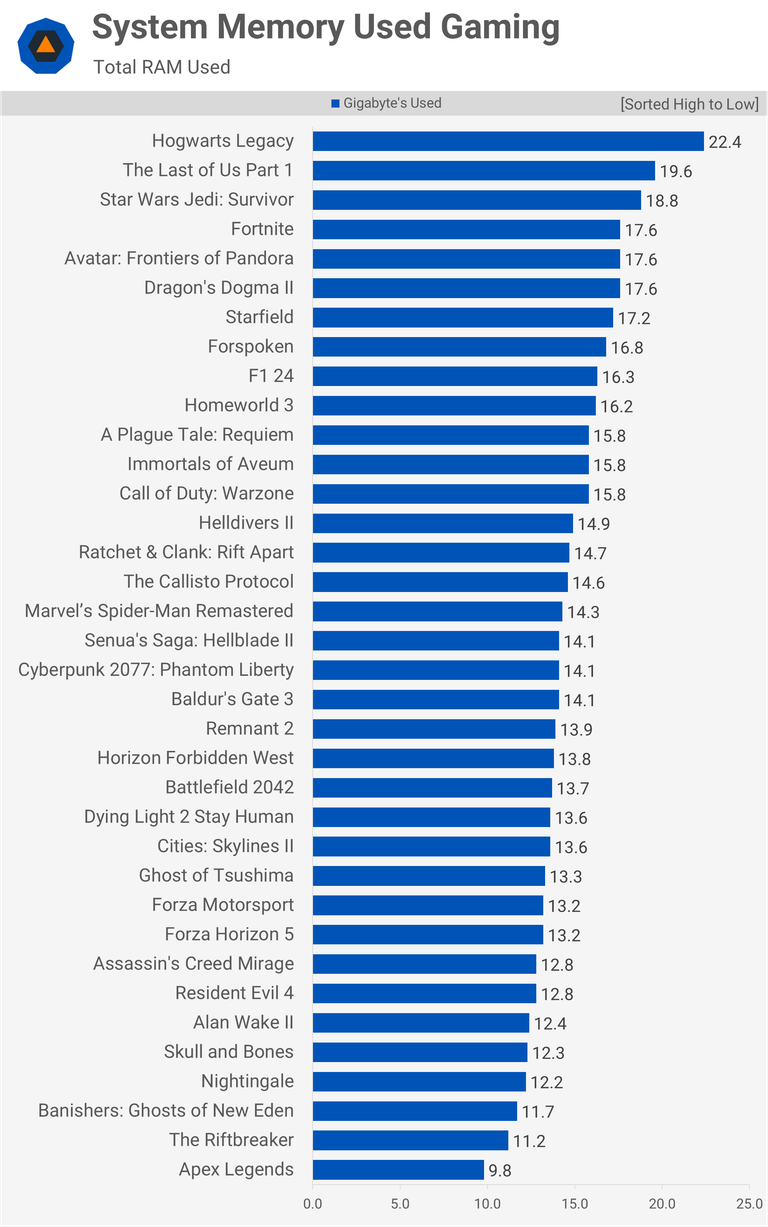
Understanding your system's behavior helps you make informed decisions. If your 16GB system consistently hovers around 14-15GB used, especially with background apps, upgrading to 32GB would likely provide a smoother experience. If you're barely hitting 10-12GB, then your RAM is likely not the issue.
What About RAM for Social Gaming and Multitasking?
For many adult gamers, especially those focused on social play and multitasking, 32GB of RAM offers a significant advantage. If you're frequently running a game, Discord for voice chat, a web browser with multiple tabs for guides or YouTube, and perhaps even a secondary monitor showing a streaming service, 32GB provides a much more comfortable experience than 16GB. Social gaming is huge this month, with many Gen Z and Millennials connecting with friends through co-op titles and voice chat platforms. A smooth multitasking experience supports this trend.
While 16GB can technically handle a game and Discord, adding browser tabs, Spotify, or other apps quickly starts to chew up that memory. The constant swapping to your page file on your SSD can introduce micro-stutters and slowdowns, which can be frustrating when you're trying to unwind with friends. 32GB ensures you have plenty of headroom for all these concurrent activities, leading to a much more fluid and enjoyable experience without performance problems. It's about balancing gaming with life, and 32GB RAM helps make that balance smoother.
Is Upgrading to 64GB RAM a Good Future-Proofing Strategy?
While the idea of "future-proofing" is appealing, especially for significant hardware investments, upgrading to 64GB RAM for gaming alone in 2026 is generally not the most cost-effective strategy. As discussed, 32GB already provides ample headroom for current and foreseeable future games. By the time 64GB becomes genuinely necessary for mainstream gaming, memory technology will likely have advanced, offering faster, more efficient, and potentially more affordable options (e.g., higher-speed DDR5 or even DDR6). Investing in 64GB now might mean you're buying a larger capacity of an older or less optimized standard when a future upgrade would be more impactful.
Instead of overspending on excessive RAM capacity today, consider future-proofing by investing in other components that offer more immediate and long-term benefits for gaming. This includes a high-end GPU, a fast NVMe SSD, and a robust CPU. These components tend to have a greater and more immediate impact on game performance and overall system responsiveness. Smart budgeting means allocating resources where they provide the most tangible gains, rather than speculating on future, uncertain requirements. For busy adults, value for money is key, and 64GB for gaming doesn't always offer that.
So, there you have it! The deep dive into whether you need 64GB of RAM for gaming in 2026 clearly points to one conclusion: for most dedicated gamers, 32GB remains the optimal choice, offering a perfect blend of performance, value, and future-readiness. While 64GB can certainly benefit niche cases like heavy content creation and extreme multitasking, it simply isn't a necessity for pushing frame rates or enjoying the latest titles.
Remember, smart hardware upgrades are about maximizing your enjoyment and value, not just chasing the highest numbers. By understanding your actual usage and current gaming trends, you can make informed decisions that keep your rig performing smoothly without unnecessary expenditure. Keep those frame rates high and your gaming sessions epic!
What's your biggest gaming challenge when it comes to hardware? Share your thoughts and questions in the comments below!
FAQ Section
Is 16GB of RAM still good for gaming in 2026?
Yes, 16GB of RAM is still perfectly capable of running most modern AAA games at decent settings. However, it can become a bottleneck if you multitask heavily or play exceptionally demanding titles with many background applications open. For a budget-conscious gamer, it's still a viable option, but 32GB offers more comfort and future-proofing.
What is RAM latency and why does it matter for gaming?
RAM latency (often expressed as CAS Latency or CL) measures the delay between when the CPU requests data from RAM and when the RAM provides it. Lower latency generally means quicker response times, which can translate to slightly better frame rates, especially in CPU-bound games or with AMD Ryzen processors. It's an important factor alongside RAM speed.
Does RAM type (DDR4 vs DDR5) impact gaming performance significantly?
Yes, DDR5 generally offers higher speeds and bandwidth compared to DDR4, leading to performance improvements in modern games, particularly on platforms that support it (like Intel's 12th gen and newer, and AMD's AM5). While DDR4 is still capable, new builds are increasingly moving to DDR5 for better future compatibility and performance potential.
Can too much RAM negatively affect gaming performance?
Having too much RAM capacity (e.g., 64GB when only 32GB is needed) generally won't negatively *affect* gaming performance, but it also won't *improve* it. The main negative impact is on your wallet, as the money could be better spent on other components like a more powerful GPU or a faster CPU that would provide tangible gains. There's no performance penalty, just an efficiency one.
Should I prioritize RAM or GPU for gaming upgrades?
For most gaming upgrades, the Graphics Processing Unit (GPU) should almost always be your top priority. The GPU has the most significant impact on frame rates, resolution, and graphical settings in modern games. Only if you consistently experience memory-related bottlenecks (which you can check with Task Manager) should RAM take precedence over a GPU upgrade, and even then, 32GB is usually sufficient.
Are there specific games that benefit more from higher RAM?
Certain types of games, particularly large open-world titles, simulation games (like Microsoft Flight Simulator, Cities: Skylines with many mods), or games with extensive modding, can be more RAM-intensive. These games often load massive amounts of assets and data into memory, potentially benefiting from 32GB over 16GB. However, even these typically don't demand 64GB for purely gaming purposes.
64GB RAM is generally overkill for most current games, 16GB or 32GB RAM is the sweet spot for performance and value, Only specific use cases like heavy streaming or content creation benefit from 64GB RAM, RAM speed and latency are often more critical than sheer capacity, Consider your overall system and budget before overspending on RAM, Future-proofing with 64GB RAM might be unnecessary as technology evolves
35


16GB Vs 32GB Vs 64GB How Much RAM Do You Need For Gaming In 2026 . How Much RAM Do You Need For Gaming In 2026 AdobeStock 423480988 768x512 . Best RAM For Gaming 2026 Capacity Speed Performance Best Ram For Gaming.webp. How Much RAM Do You ACTUALLY Need For Gaming 2025 YouTube . Is 64GB RAM Overkill For Gaming Is 64GB RAM Overkill 1024x1024
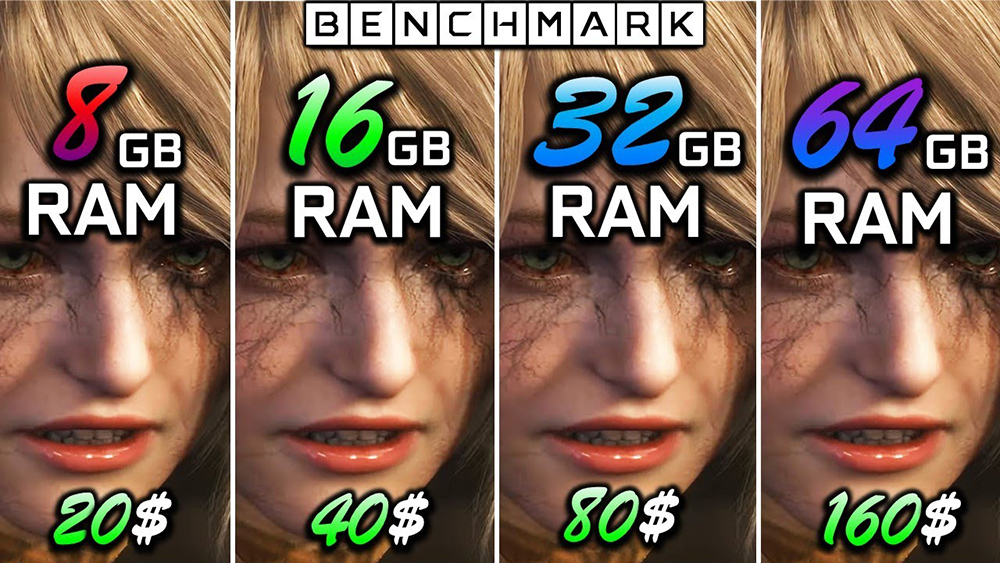
How Much RAM Do You Actually Need For Gaming In 2026 Reforged Rigs 16GBvs32GB . Game Console Memory How Much RAM Do You Need For 2023 Games Archyde 1681726539 . How Much Ram For Gaming Update 04 2026 How Much Ram For Gaming 1 . What Is RAM Everything You Need To Know PCVenus How Much RAM Do I Need For Gaming. Best RAM For Gaming In 2026 9meters 1pjstsxr3ks 1536x1152


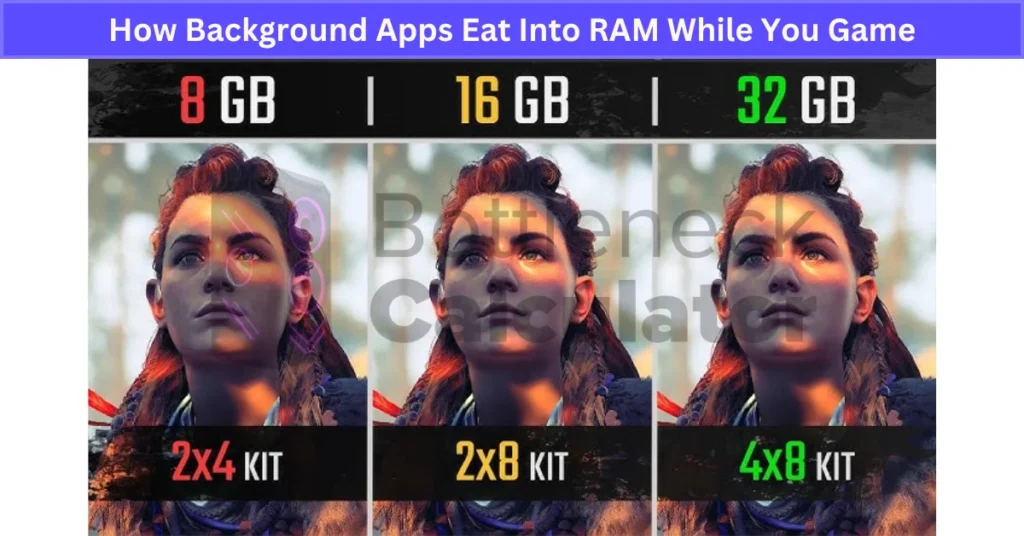
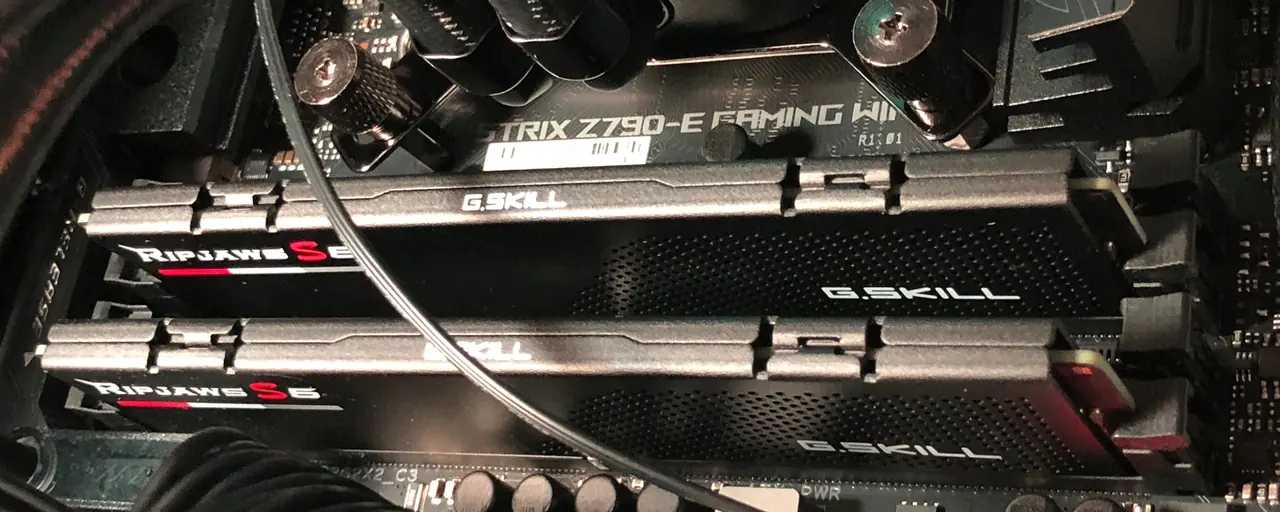
How Much RAM Do You Actually Need For Gaming In 2026 VRSUS Ram2 1024x683 . How Much Ram For Gaming Optimize Your Gaming Experience With The Right Optimize Your Streaming And Gaming Experience How Much RAM Do You Really Need . Find Out How Much RAM Do You Need For Gaming In 2026 How Much Ram For Gaming . How Much RAM Gamers Need In 2026 16GB Vs 32GB Vs 64GB How Background Apps Eat Into RAM While You Game. How Much RAM Do You Need For Gaming 2026 How Much Memory For Gaming.webp


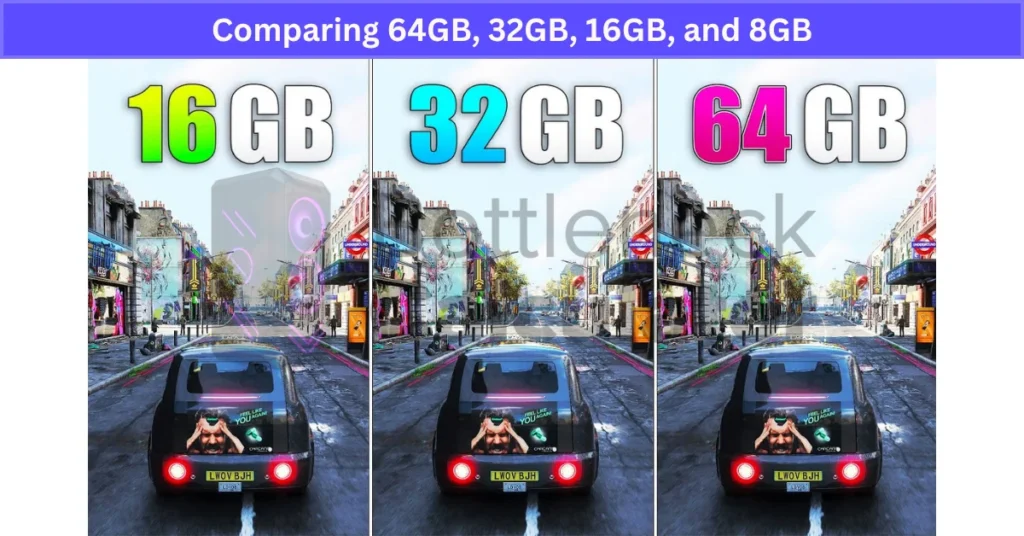
How Much RAM Do You Really Need In 2026 Gaming . How Much RAM For Gaming In 2026 8GB Vs 16GB Vs 32GB The Ultimate Guide How Much Ram For Gaming 768x429 . How Much RAM For A Gaming PC In 2024 16 Vs 32 Vs 64 GB Tested In 30 Games 1720102545 2201 Photo . How Much RAM Gamers Need In 2026 16GB Vs 32GB Vs 64GB Comparing 64GB 32GB 16GB And 8GB. Is 64 GB Ram Good For Gaming A Definitive Guide For Optimal Gaming Is 64 GB Ram Good For Gaming 1024x576


RAM Reality Check How Much Memory Does Your PC Actually Need In 2026 2 . How Much RAM Gamers Need In 2026 16GB Vs 32GB Vs 64GB How Much RAM Do You Really Need For Gaming 8GB Vs 16GB Vs 32GB. How Much RAM Do You Need For Gaming Complete Guide 2025 78e7fd79 02bb 4c1b A3f6 . Find Out How Much RAM Do You Need For Gaming In 2026 System . How Much RAM Do You Really Need For Gaming In 2025 Archives Avika How Much RAM Do You Really Need For Gaming In 2025



Mejor RAM Para Gaming En 2026 Estados Unidos DDR4 Vs DDR5 Mejor Ram Para Gaming 2026 Ddr5 32gb. How Much RAM Do You Need For Gaming In 2023 Tested In 5 Games YouTube . How Much RAM Do You ACTUALLY Need For Gaming 2023 YouTube . How Much RAM Do You Need For Gaming In 2025 Guide How Much RAM Do You Need For Gaming 1200x800 . Gaming RAM Guide 2026 How Much RAM For Gaming 16GB Vs 32GB Upgrade Battlefield 2042 2048x1152



Crucial Pro DDR5 64GB The Amazing Gaming RAM You Need YouTube . Best Gaming Ram How Much RAM Do You Need For Gaming . How Much RAM Do You Need In 2026 8GB Vs 16GB Vs 32GB 02651a. Ram Nascar 2026 What Is Ram What Does It Do How Much Do You Need Ram 2 . RAM Reality Check How Much Memory Does Your PC Actually Need In 2026 Razer Blade 14 2025 G34w